Our group (www.yorku.ca/zayedlab) at York University’s
Dept. of Biology (Toronto, Canada) has positions available for a postdoctoral
fellow in Ecological Genomics with demonstrable expertise in genomics and bioinformatics
for the following two projects:
BeeCSI:
Our group is leading a national Genome Canada-funded initiative called BeeCSI (https://beecsi.ca/)
to develop stressor-specific biomarkers for honey bees. We are looking for a
postdoctoral fellow with experience in transcriptomics and interest in honey
bee biology to lead the analysis of a large RNAseq dataset consisting of 43
laboratory and 12 field experiments where honey bees were naturally and
experientially exposed to a large number of relevant stressors, alone and in
combination. The RNAseq datasets have been fully assembled and the successful
candidate will be able to initiate the bioinformatics analyses immediately
after starting the position. The goal of our research is to characterize the
molecular machinery underlying the honey bee’s response to multiple stressors,
and to discover diagnostic transcriptional signatures that can be used to predict
exposure to stressors in the field.
Genomics
of Coral Resilience: A new research direction for the lab! The Postdoctoral
fellow will use several ‘Omic tools to study the genomic basis underlying
symbiont shuffling and tolerance to thermal-stress in reef-building corals, in
collaboration with the Coral Resilience Lab at the Hawai’i Institute of Marine
Biology.
Qualified candidates are encouraged to submit a cover
letter outlining their expertise, a CV, reprints of relevant papers, and
contact information for 3 referees to honeybee@yorku.ca. We will evaluate the
applications as they are received, with an application deadline of August 31st,
2023.
In addition to the honey bee lab, York University is home
to the Center for Bee Ecology, Evolution and Conservation (BEEc,
https://bees.yorku.ca). Successful candidates will have a chance to interact
with the diverse faculty, fellows and students at BEEc, and participate in BEEc
activities and training initiatives.
Start Date: Fall 2023
Salary: Starting from $50,000 and Commensurate with
experience.
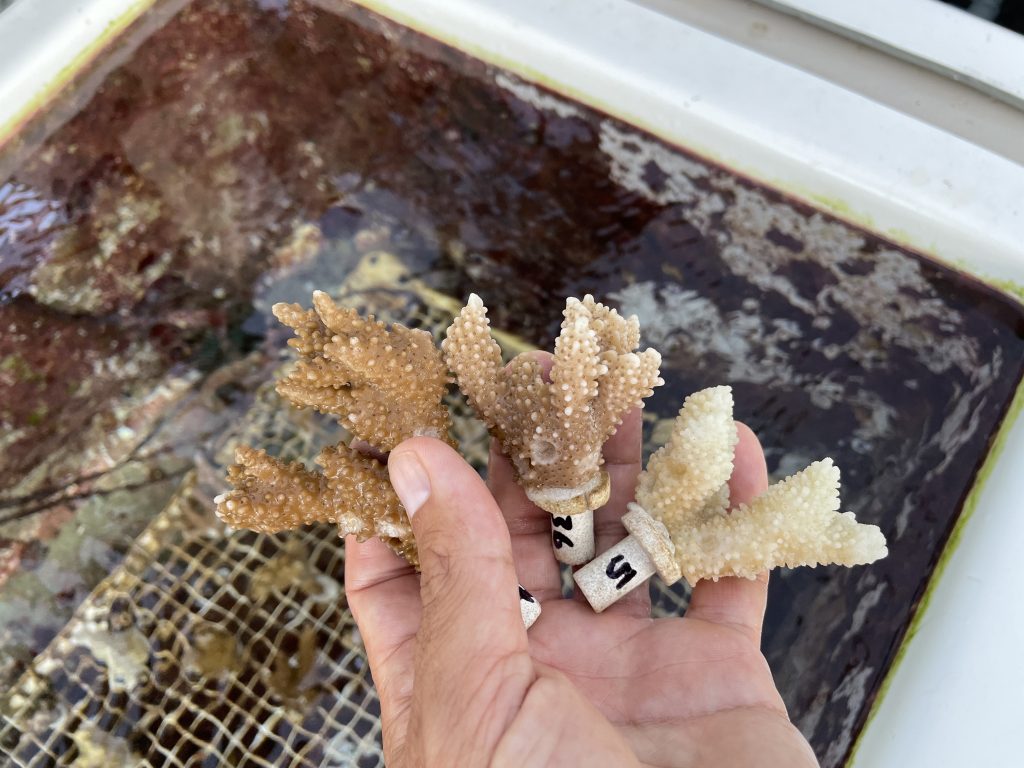
I spent a good amount of time last year working @ the Hawai’i Institute of Marine Biology [long story… but briefly, i always loved corals and marine biology and decided to dip the proverbial but also actual toes in the salty water for my sabbatical]. Here is my research project described in a single picture / word:
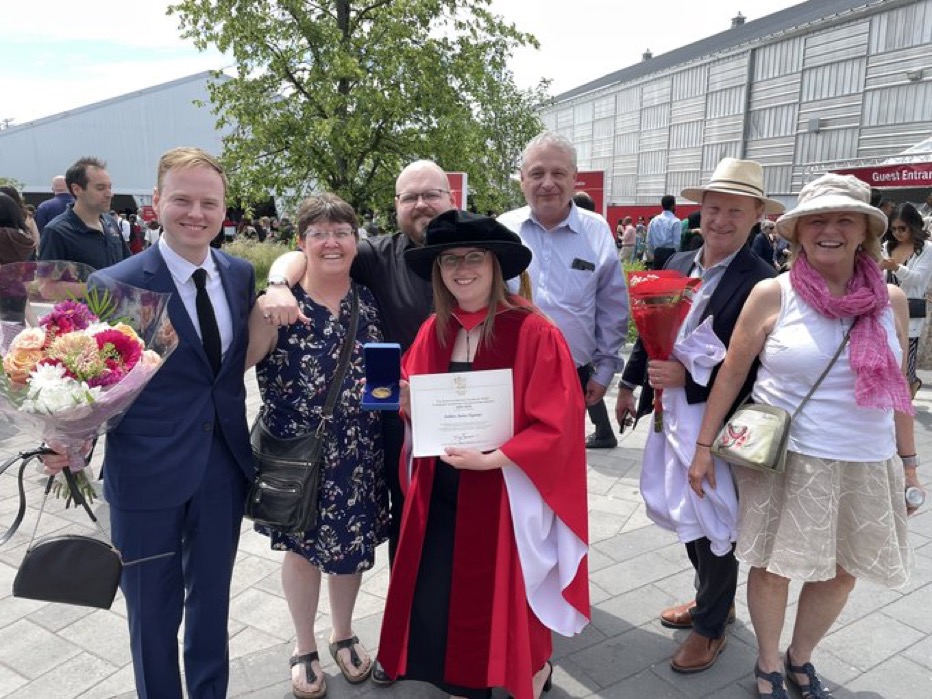
So happy to share that Dr. Katie Dogantzis won the Governor General’s Academic Gold Medal for best doctoral thesis at YorkU. Katie did her PhD and MSc in our group. We are so proud of you Katie!!!
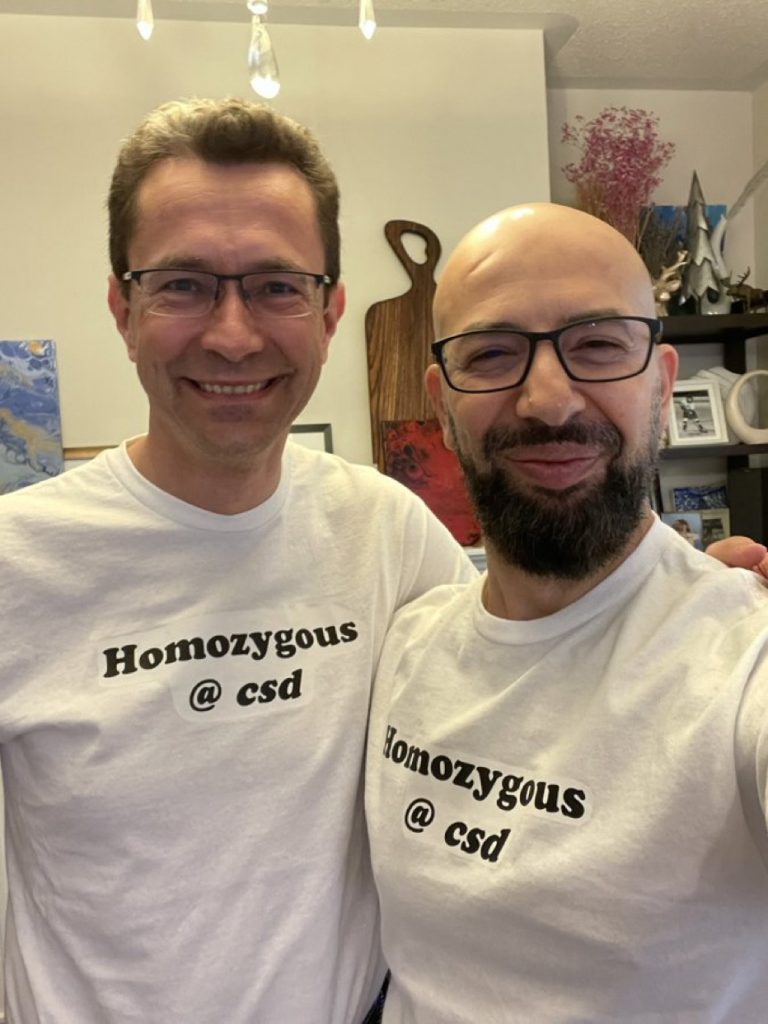
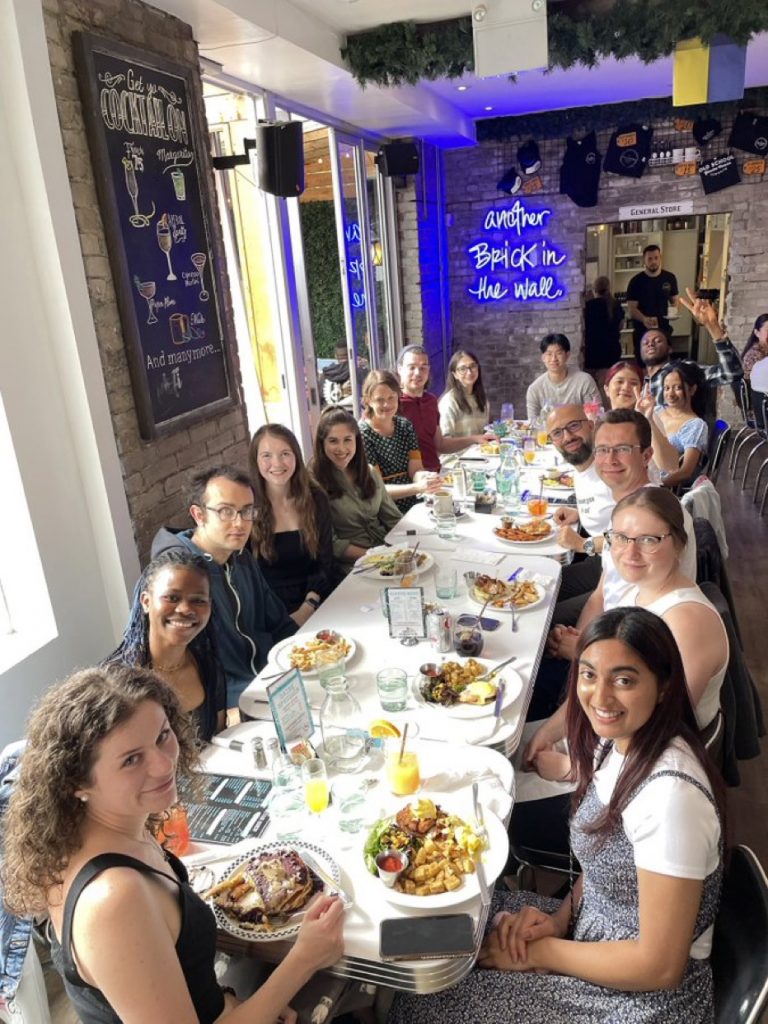
We were super excited to host Dr. Martin Hasselmann very briefly early this summer! Martin and I both worked on different aspects of complementary sex determination in bees during our PhD… I met him briefly in Germany in the early 2000’s and we’ve been good friends ever since. When he visited us in Toronto, i made these custom t-shirts for us… its an inside joke that maybe 20 to 30 people in the world would get (bees homozgyous at the csd gene are diploid males, and both Martin and I are also diploid males… ha ha ha… slow clap 🙂 I was really delighted when Martin told me that he wanted to spend a few weeks of his sabbatical in our group! yay!!! #homozygousatcsdforever!!!
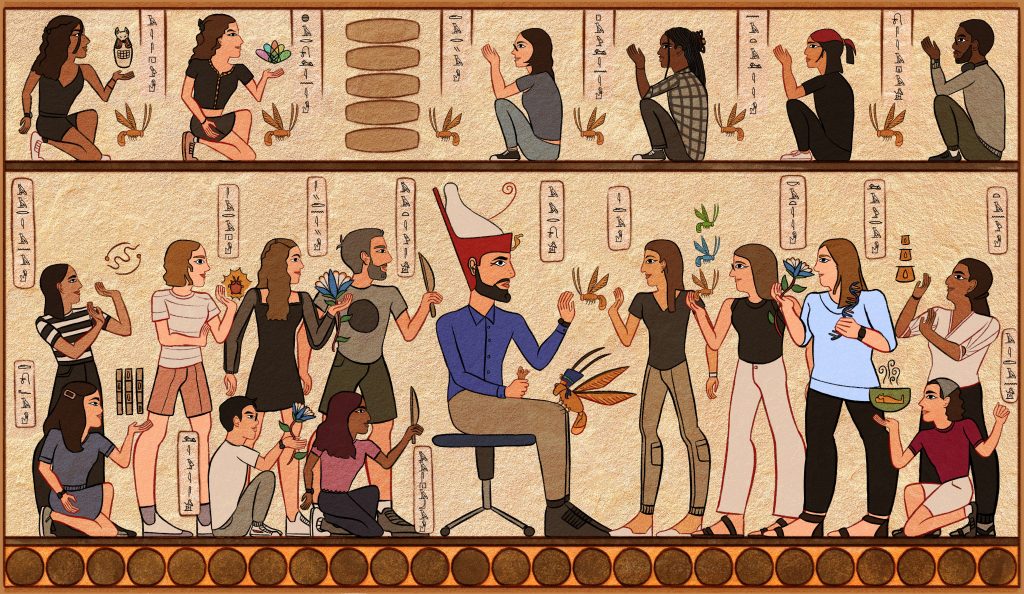
Martin and AmroLab Brunch with Martin, June 2023 Clockwise, starting from 12 o’clock. Lewis, Oseaga, Aishu, Natalie, Amro, Martin, Katie, Mashaba, Caroline, Pauline, Sam, Sydney, Dova, Sarah, Aidan, Darya
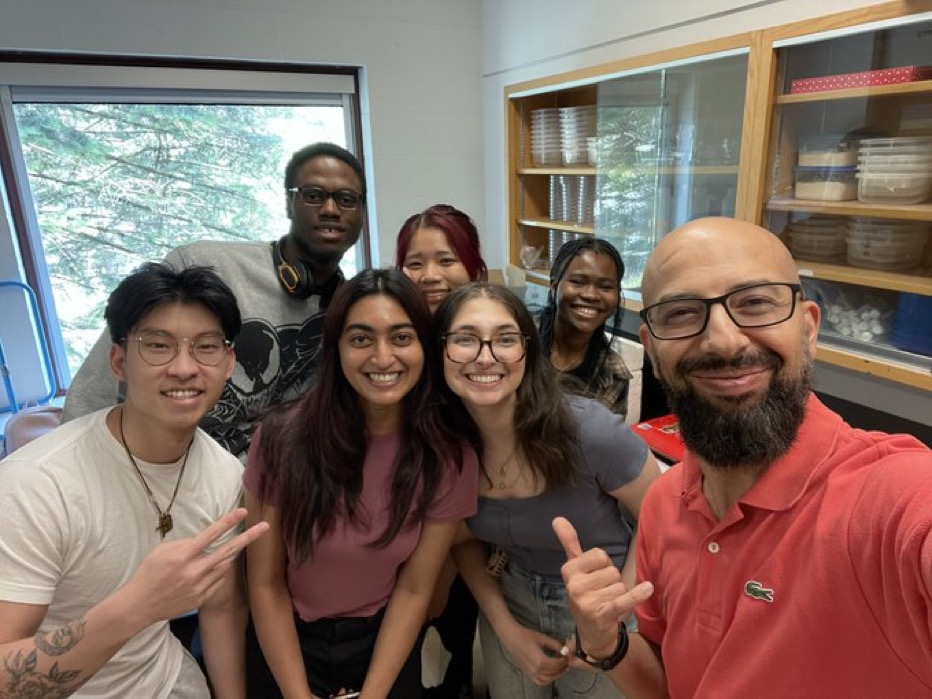
Quick summer update! First off, very happy to welcome new and returning undergrads to the lab this summer. Lewis (Summer NSERC USRA, Pauline, Oseaga, and Natalie (Summer RAY students), Mashaba (Research Assistant) and Research Practicum Student, Darya!
Top Row: Oseaga, Natalie, Pauline [L->R] Bottom Row: Lewis, Mashaba, Darya, Amro [L->R]Never a dull moment 🙂
“World Bee Day, a chance to remind people how important, and how threatened, the insects are” was published by CBC on May 20th, and portions of the interview were also aired on CBC Radio.
In the article, Dr. Zayed states “I think the next step is to kind of galvanize that support and actually create better habitats in Ontario, and support legislation that kind of protects bees from pesticides and other stressors.”
Beyond legislation, individuals can include native flowering plants or “pollinator gardens” on the land they occupy, participate in programs like the Bumble Bee Watch, and try to support legislation that promotes biodiversity, environmental protection, and more transparency about the chemicals used on public land.”
Dr. Zayed also did a phone interview with Newstalk 1010 and participated in a York University World Bee Day special event titled “Bee the Change”. The recording of this event will be posted here: https://www.youtube.com/user/YorkUAlumni
This summer, the Zayed lab will be joined by undergraduate students Nathalie Do, Sheri Grach, and Ebadullah Kabir as Research at York (RAY) students. Check out what each of them has to say about their personal and research interests:
” My name is Natalie and I am a 4th year Environmental Biology major. My passion for bees started when I chose to observe generalist pollinators for one of my courses last year (Experimental Design).
I have previously known about the importance of bees and the dangers that they are in but doing such project truly “sealed the deal” for me! They are so cool and I would love to contribute to helping them survive against climate change.”
“My name is Sheri and I am currently starting my third year for biomedical science at York. I am very passionate about health and wellness, and I love being and playing sports outdoors.
I wanted to join Dr. Zayed’s lab as I was a part of STEM Fellowship research before and I was extremely interested researching the genomes of bees and habitats. Dr. Zayed’s lab was the perfect opportunity for that while continuing to expand my knowledge and skills, and I am very grateful for this opportunity.”
“My name is Ebadullah Kabir and I am entering the third year of my Specialized Honours Neuroscience program this coming Fall. I am a big fan of football (the game you play with your feet – so many people call it soccer, I am just not a fan of calling it that way 🙂
I decided to join Dr. Zayed’s lab because I thought it would be a great opportunity for me to broaden the scope of my knowledge and experience in research. Also, hearing that we would work with bees, I did not hesitate – not that I want their honey 🙂 but because they are such smart insects and so dear to me.”
Since November of 2021, we’ve welcomed Dr. Bahar Patlar into the Zayed Lab community. Always happy to dive into a deeper understanding when we discuss new publications and ready for have a good laugh, we’ve enjoyed her brief time with us and wish her all the best of luck as she begins her own lab as Principle Investigator at Martin Luther University Halle-Wittenberg, Germany.
Here’s what Bahar said about her research with us at York University:
“Male reproductive genes, especially one’s coding seminal fluid proteins are known among the most rapidly evolving genes. Thus, they likely accumulate genetic differences between populations at a high rate that may eventually contribute to speciation. During this post-doctoral training led by Prof. Amro Zayed at York University, using the molecular population genetics approach, I investigated the rate of evolution and divergence of drone ejaculate proteins in honeybee Apis mellifera lineages that occur naturally over the vast and varied geographical areas across the world.”
“Since my Master of Science degree projects, I’ve studied male reproductive biology with a wide range of organisms including a non-famous invasive fruit fly Zaprionus tuberculatus, a simultaneous hermaphroditic marine flatworm Macrostomum lignano, and the laboratory all-star Drosophila melanogaster. Now, here at Zayed lab, I met with the incredible world of the honeybee, Apis mellifera.”
“A new chapter in my career will start soon in Germany where I will start my own research group at Martin Luther University Halle-Wittenberg. I plan to combine my knowledge from animals with different mating systems to understand more about the evolution of reproductive traits using fruit flies, honeybees, flatworms, and many more to understand the contribution of reproduction to diversity in life.


 Comments (0)